Culture · 5 min
Life in a Himalayan village
What the year actually looks like in Nubri and Tsum: barley, yaks, the winter migration, and the houses that stay shut.
Different ways to walk Manaslu.
Understanding the Manaslu region.
Who Drokpo is.
What the year actually looks like in Nubri and Tsum: barley, yaks, the winter migration, and the houses that stay shut.
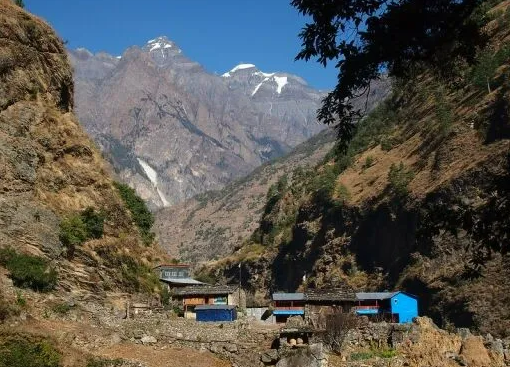
Most trekkers pass through eight or nine villages between the trailhead and the pass, sleep in them, eat in them, and leave with very little sense of what happens there in the other fifty weeks of the year. This is a short account of that.
The lower Budhi Gandaki is Gurung and Magar, Hindu in practice, farming maize, millet and rice on terraces that drop hundreds of metres to the river. Houses are stone with slate or tin roofs. This part of the valley looks like most people's mental picture of Nepal.
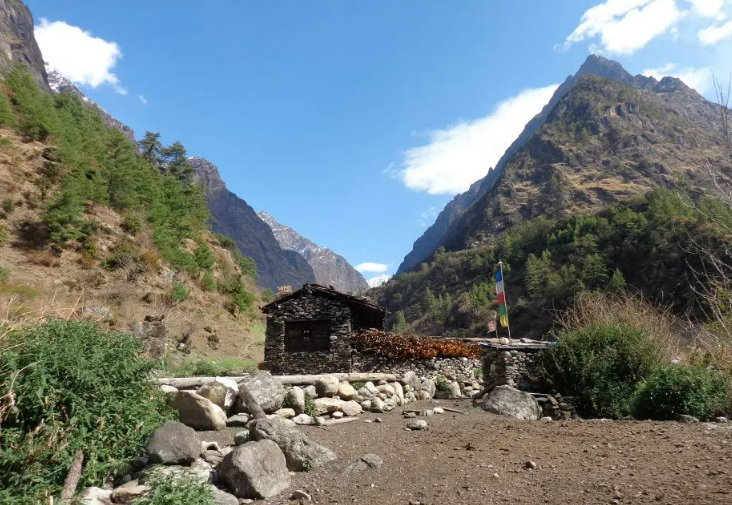
Somewhere above Jagat the mani walls start appearing and by Deng the change is complete. These are the Nubri, of Tibetan origin, who crossed the passes centuries ago and kept the language, the religion and the architecture. Flat roofs, built low and tight against the wind, with stacked firewood on top that serves as fuel store and as a visible measure of how well the household is doing.
The eastern side valley is Tsum, whose people speak their own dialect and keep their own calendar. It is close enough to Nubri to be reached in a day and different enough to feel like another country.
Nubri houses are built low and flat-roofed, with firewood stacked on top.
Everything above 3,000 metres is organised around a growing season that is far too short. Barley, buckwheat and potatoes go in during spring, and above about 3,500 metres it is mostly potatoes because nothing else finishes in time.
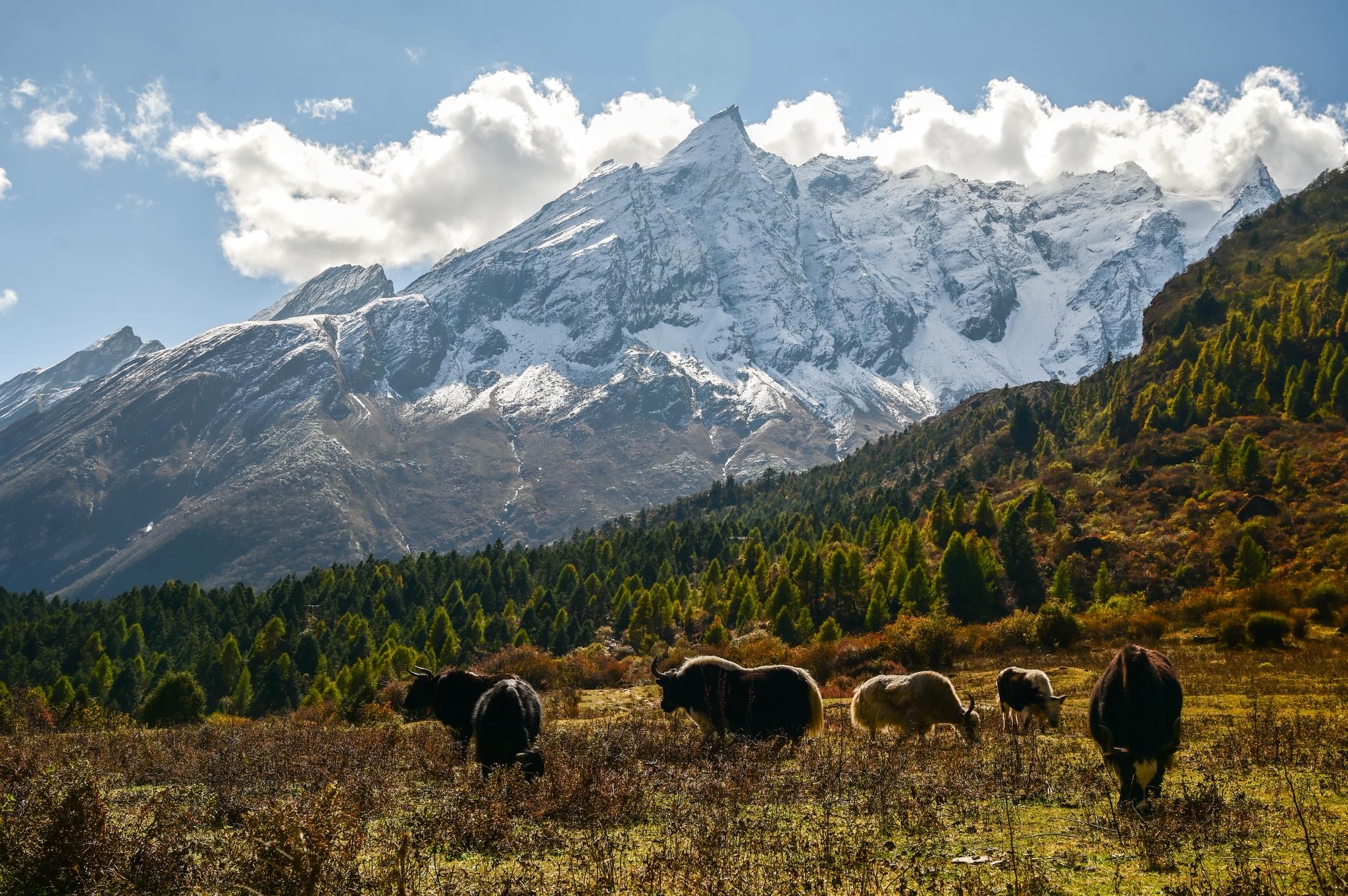
Summer is the monsoon, which is the busiest agricultural period and the reason we do not run treks then. It is also when the yaks go up. Herding families move to the high pastures above Samagaun and Samdo with the animals and stay through the warm months, which is the pattern the word drokpo describes.
Autumn is harvest, and it overlaps exactly with the main trekking season, so households are managing a barley crop and a full lodge at the same time. If you walk through Lho or Chhekampar in October and everyone seems busy, this is why.
Winter empties the upper valley. Many families move to lower ground or to Kathmandu, the high lodges at Samdo and Dharamsala close, and the Larkya La is frequently snowed shut. The villages you saw full in October are half shuttered by January.
Walk through any of these villages and count the closed doors. A large number of houses are locked for most of the year, and not because of the season.
The population of the upper valleys has been falling for decades. Young people go to Kathmandu for school and largely do not come back, or go to the Gulf and Malaysia for work and send money home. Remittance is a bigger part of the local economy than trekking is, in most households.
The anthropological literature that first brought outsiders to Tsum was substantially about polyandry, brothers sharing a wife so that a small landholding was not divided between heirs. That practice has largely disappeared within living memory, along with the conditions that made it rational.
Tsum, under Ganesh Himal. Barley, buckwheat and potatoes, and a short season.
The gompa is not an attraction, it is a functioning institution, often the largest building in the village and frequently the one that maintains the trail, the bridge and the water line.
Ribung Gompa stands above Lho. Pungyen sits east of Samagaun with the north face behind it. In Tsum, Rachen Nunnery near Chhokangparo houses a large community of nuns and Mu Gompa sits at the head of the valley in the Sakya lineage, both established in the early twentieth century by teachers from Tibet.
Tsum's defining commitment is the shyagya vow. The valley was formally declared non-violent in 1920 and hunting and the killing of animals have been forbidden there ever since. It is a community undertaking rather than a monastic rule, renewed and enforced locally, and the most obvious consequence for a visitor is that the wildlife is noticeably unbothered by people.
Lhosar, the Tibetan new year, falls in February and is the largest event in both valleys. Families who have been away come back, the gompas hold masked dance, and there is a great deal of eating and drinking in houses that have been quiet since November. Saka Dawa in May or June is the other significant date, marking the Buddha's birth, enlightenment and death in a single day, and is observed strictly in Tsum.
Neither is staged for visitors, and that is the whole appeal.
Walk clockwise around mani walls, chortens and prayer wheels, keeping them on your right.
Ask before photographing people. Ask separately about photographing inside a gompa, where the answer is often no.
Remove your shoes at a threshold, and do not point your feet at an altar or a person.
Eat at the lodge you sleep in. Rooms are cheap because the household expects to make its money on food.
Do not bring bottled water above Jagat. There is no way to remove the plastic except on somebody's back.
Accept the tea. It is offered a lot and refusing is stranger than drinking it.
Tell us your dates and pace. A journey designer replies within two days.