Tsum Valley Trek
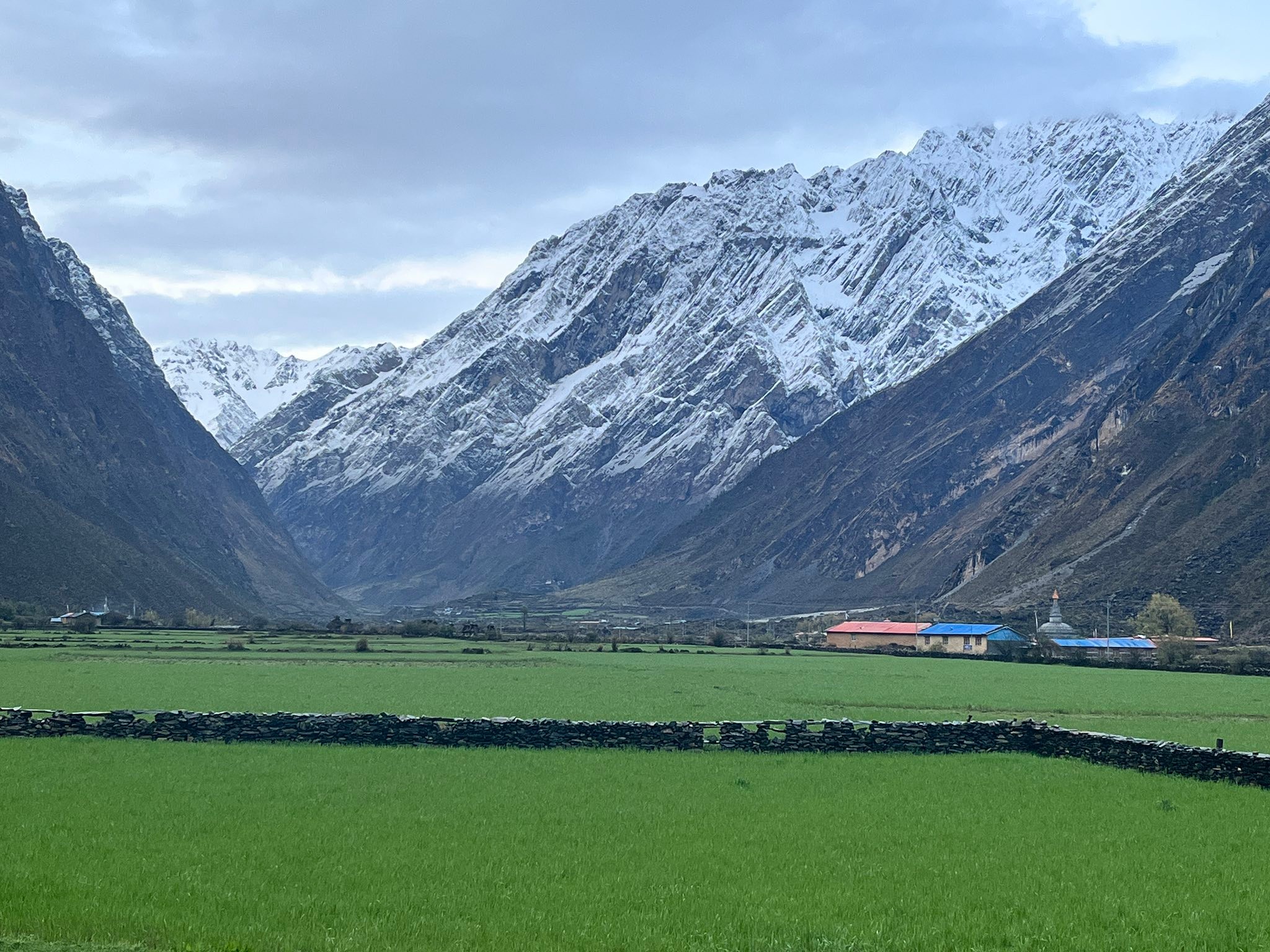
A hidden valley on the Tibetan border, closed to visitors until 2008 and still bound by a vow against killing animals. The trail climbs from the Budhi Gandaki into a broad, quiet valley of stone villages and monasteries.
This is a walk for stillness rather than altitude. Two nights at Mu Gompa and a morning at the nunnery of Rachen give the valley time to work on you.
This is the quietest trail we walk. Two mornings at Mu Gompa are spent with the monks, and one full day is given to doing nothing at all.
A licensed guide from the Gorkha district on every departure
Two to ten walkers, one porter for every two
Breakfast, lunch and dinner on every trekking day
- Highest point
- 3,700 m · Mu Gompa
- Grade
- Moderate
- Best season
- Mar – May · Sep – Nov
- Starts and ends
- Kathmandu
Touring Information

- Milarepa's cave at Piren Phu
- Rachen Gompa and its community of nuns
- Two nights at Mu Gompa, the highest monastery in the valley
- Nile and Chhekampar villages
- No pass to cross; the highest sleep is below 3,800 m

Arrive and meet your guide.
Drive along the Budhi Gandaki.
Into the gorge.
Leave the Manaslu trail for the Tsum turn-off.
Steep forest into the lower valley.
The valley opens. Ganesh Himal ahead.
Past Piren Phu and Rachen Gompa.
A short climb to the monastery.
Morning puja, then a walk toward the border pastures.
Return down the valley and stay near the nunnery.
Back through Chhekampar.
Rejoin the Budhi Gandaki.
Walk out and drive back.
Transfer to the airport.
Breakfast, lunch and dinner are included on every trekking day. Kathmandu nights include breakfast.
- Licensed, English-speaking local guide from the Gorkha district
- Porters at one per two trekkers, loads capped at 20 kg
- Manaslu Conservation Area and restricted-area permits
- Teahouse accommodation on trail, twin share
- Breakfast, lunch and dinner on every trekking day
- Private transport Kathmandu – trailhead – Kathmandu
- Two nights in Kathmandu, breakfast included
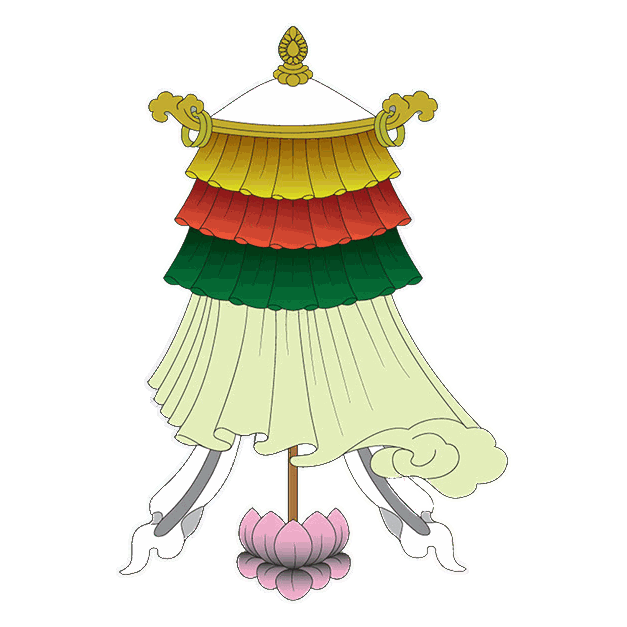
About the Tsum Valley
It is a side valley off the main trail, running north-east to the Tibetan border, and it was closed to visitors until 2008. It is a cultural walk rather than a high pass: the highest point is Mu Gompa at about 3,700 m, so there is no Larke La and far less altitude to manage. What it has instead is a continuously inhabited Tibetan Buddhist valley — monasteries, nunneries, meditation caves — living under a vow of non-violence that its communities have kept for generations.
Less demanding at altitude, yes, and the days are not shorter. You still walk five to seven hours on rough trail, and the climb out of the gorge to Chumling is a hard first day. What you avoid is the pass.
Yes, and it is a separate one from the Manaslu permit: US $40 per person for the first seven days from September to November and US $7 a day after, with lower rates from December to August. The same rule applies — two trekkers minimum, a licensed guide, a registered agency.
If you have the time, it is the version we would walk ourselves. The two share their first days up the Budhi Gandaki, so combining them costs about a week rather than doubling the trip, and it turns a mountain walk into a mountain walk with a fortnight of culture in the middle of it.
Permits and paperwork
Yes, and it is not optional. The upper Manaslu valley is a restricted area, and the restricted-area permit can only be issued to a group of two or more trekkers travelling with a licensed guide through a registered Nepali agency. You cannot obtain one as an independent walker, and there is a checkpoint at Jagat where it is inspected. Solo trekkers are paired into a group before departure.
Three. The Manaslu Restricted Area Permit is US $100 per person for the first seven days from September to November, then US $15 for each additional day; from December to August it is US $75 for the first seven days and US $10 a day after. The Manaslu Conservation Area Permit is NPR 3,000 (about US $25), and because the trail finishes inside the Annapurna region you also need the Annapurna Conservation Area Permit, another NPR 3,000. We arrange all three; they are quoted separately from the trip price because the restricted-area fee depends on your dates and how many days you spend above Jagat.
The restricted-area permit is issued against your passport, so we need a scan of the photo page and two passport photographs before we can apply. Permits are issued in Kathmandu and cannot be applied for from the trailhead, which is why we ask for these at least a fortnight before departure.
You should not walk this trail without it, and it needs to cover trekking to the altitude you will reach as well as helicopter evacuation. Above Samagaun there is no road, and the only way off the mountain quickly is by air. Ask us what the policy needs to say if you are unsure — it is a question we answer most weeks.
Seasons and weather
October and November are the clearest and most settled, with cold nights high up and reliable views of Manaslu. March to May is the other season: warmer nights, rhododendron in the middle valley, and more afternoon cloud. The monsoon from June to August makes the lower gorge leech-ridden and the road to the trailhead unreliable, and deep winter closes the pass.
It happens, most often in late autumn and early spring, and it is a decision your guide makes on the ground with the lodge keepers at Dharamsala rather than one taken in Kathmandu. When the pass cannot be crossed safely the group returns down the valley the way it came, which is a longer walk out and a different trek from the one you booked — but it is the only answer we will give to that question.
At Dharamsala, the last stop before the pass, expect nights around −10 °C in late autumn and colder in winter. Lower down, below Namrung, it is mild. The full gear list we send after booking is written for the coldest night, not the average one.
On the trail
Every journey begins and ends in Kathmandu. The drive to Machha Khola takes eight to ten hours by private jeep on a road that is paved for the first half and not for the second. The return from Dharapani or Besisahar is similar. There is no flight to the trailhead.
In teahouses — family-run lodges in the villages along the trail. Twin rooms with a shared bathroom for most of the route; simpler and colder the higher you go. Nothing on this trail is a hotel, and that is much of the point.
Patchy in the lower valley and effectively absent above Namrung. A few lodges sell wifi by the hour when their solar has held up. We treat the quiet as part of the journey rather than a problem to solve, and we tell families at home to expect several days of silence.
Most lodges charge devices for a small fee, from solar. It is slower and less reliable the higher you go, so bring a power bank, and keep batteries in your sleeping bag on the cold nights — they lose charge fast at −10 °C.
We do not buy bottled water above Jagat, because there is no way to take the plastic back out of the valley. Boiled water is available at every lodge and we carry filters. Bring a bottle that can take boiling water.
Every journey is shaped with you before it is booked.
Tell us your dates, your pace, and what you hope to leave behind. A Journey Designer writes back within two days.
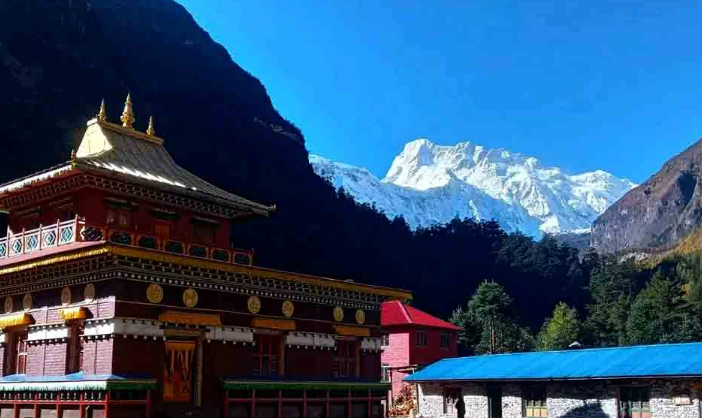
Manaslu Circuit Trek
Two weeks around the eighth-highest mountain on earth, on a trail that still carries more mules than trekkers.
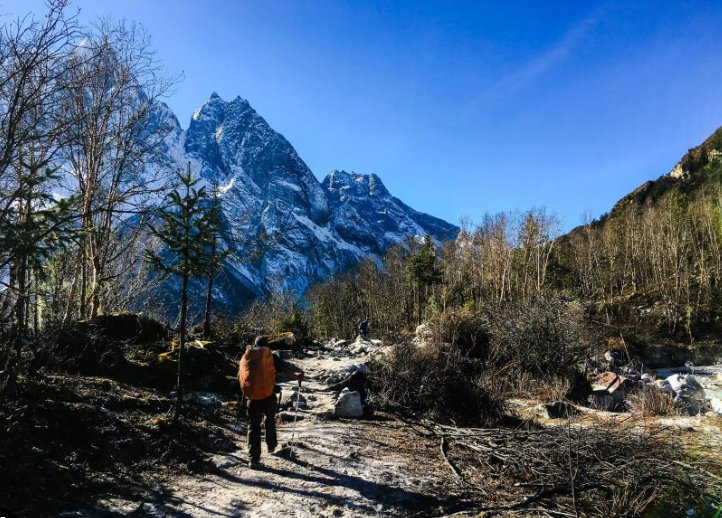
Soul to Summit – A Mindful Journey to Serang and Pungyen
Walk the ancient trails of Nubri, where the Himalayas hold stories of faith, stillness, and timeless wisdom.
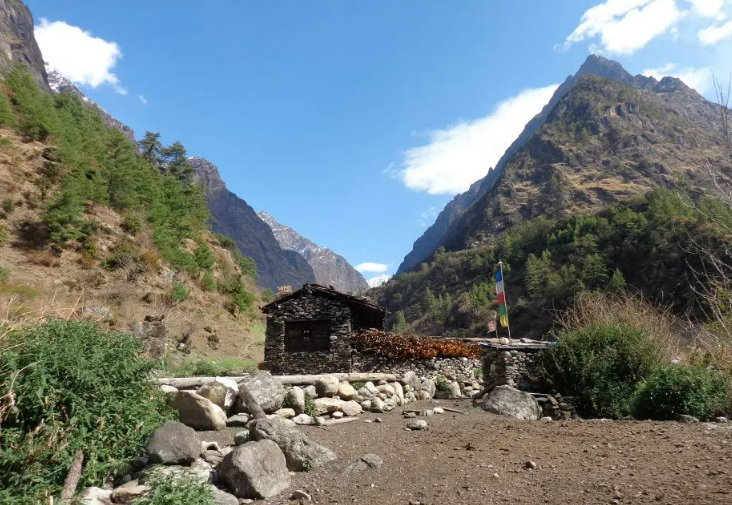
Ethno-Eco Trek: The Himalayan Lab
A trek designed for university students researching Himalayan ecology or Himalayan culture, and for the field visits their courses ask of them.