Mani walls and morning bells.
Nubri and Tsum practise Tibetan Buddhism of the Nyingma and Kagyu schools. The valleys hold monasteries, nunneries, meditation caves and a living tradition of non-violence.
- Tradition
- Tibetan Buddhism
- Tsum vow
- Shyagya, declared 1920
- Mu Gompa
- Sakya lineage, upper Tsum
- Rachen Nunnery
- ~3,240 m, near Chhokangparo
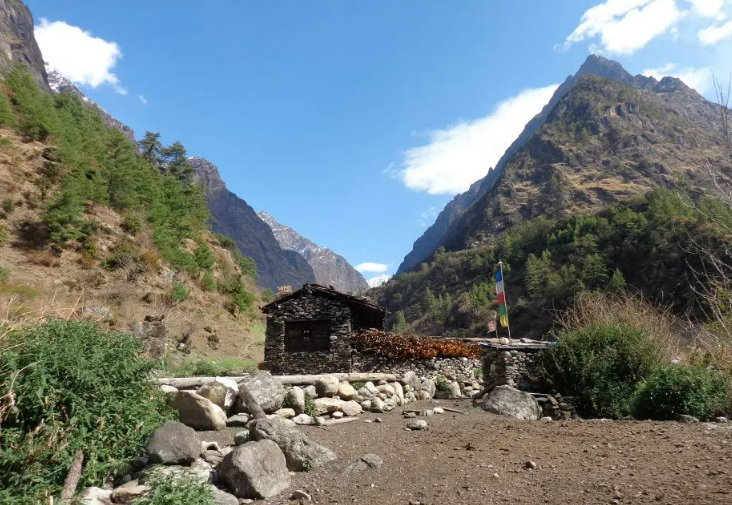
Above Deng the religion changes along with the architecture. Nubri and Tsum are Tibetan Buddhist, and the practice here is not a heritage exhibit. The gompas are in use, the monks and nuns are in residence, and the festivals happen whether or not anyone is watching.
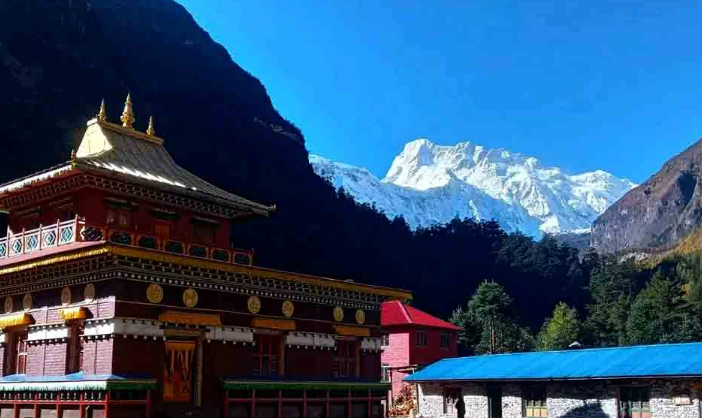
Ribung Gompa stands above Lho on a rise that catches the last light on Manaslu, and the evening puja there is the one most trekkers remember. Pungyen Gompa sits east of Samagaun, named for the mountain, rebuilt more than once after avalanches, with the north face directly behind it. Both are reachable on foot from a lodge in under two hours.
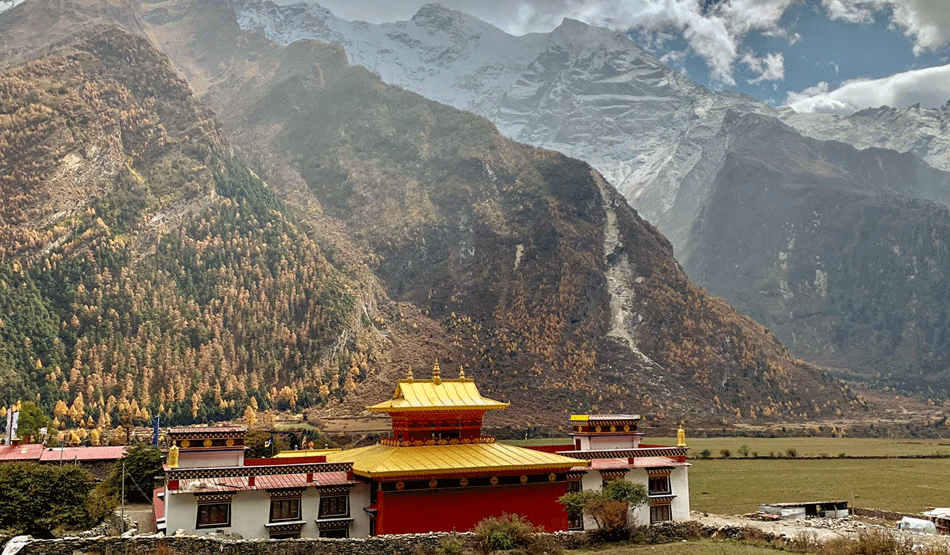
In Tsum the monastic tradition is denser. Mu Gompa, at the top of the valley, follows the Sakya lineage and sits alone at the head of the pastures with nothing above it but the border. Rachen Nunnery, at around 3,240 metres near Chhokangparo, houses a large community of nuns. Both were established in the first decades of the twentieth century by teachers from Tibet who meditated in the caves along the valley rim, and sources differ on the exact founding dates. Piren Phu, the cave associated with the poet-saint Milarepa, is nearby and is the valley's oldest site of pilgrimage.
The shyagya vow is the thing that makes Tsum unusual even by Himalayan standards. The valley was formally declared non-violent in 1920, and hunting and the killing of animals have been forbidden there since. It is a community vow rather than a monastic one, renewed and enforced locally, and it is the reason the wildlife in Tsum is noticeably less afraid of people than elsewhere in Nepal.
The calendar is worth knowing if your dates are flexible. Lhosar, the Tibetan new year, falls in February and is the biggest event of the year in both valleys, with masked dance at the larger gompas. Saka Dawa, in May or June, marks the Buddha's birth, enlightenment and death in a single day and is observed strictly, with an emphasis on non-harm that Tsum takes further than most places. Neither is arranged for visitors, which is precisely the point.
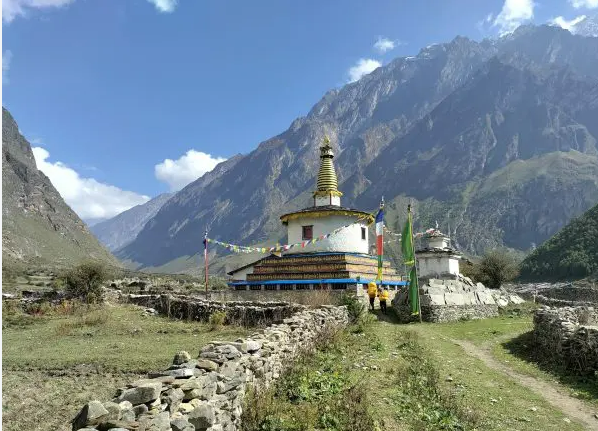
A few practical courtesies, all of which your guide will handle if you forget. Walk clockwise around mani walls, chortens and prayer wheels, keeping them on your right. Ask before photographing people, and ask separately before photographing the inside of a temple, where the answer is often no. Remove shoes at the threshold. Do not point your feet at an altar or at a person. If you want to make an offering, small notes are normal and your guide will show you where they go.
- Ribung Gompa, above Lho, best evening puja on the circuit
- Pungyen Gompa, east of Samagaun, directly beneath the north face
- Mu Gompa and Rachen Nunnery in Tsum, both founded in the early twentieth century
- Piren Phu, the Milarepa cave, the valley's oldest pilgrimage site
- Lhosar in February · Saka Dawa in May or June

Three ways to walk Manaslu.
Everything on these pages is walked on one of our journeys. Start with the three we are asked about most.
Ready to walk?
Tell us your dates and pace. A journey designer replies within two days.