Nubri, Tsum and the hill villages.
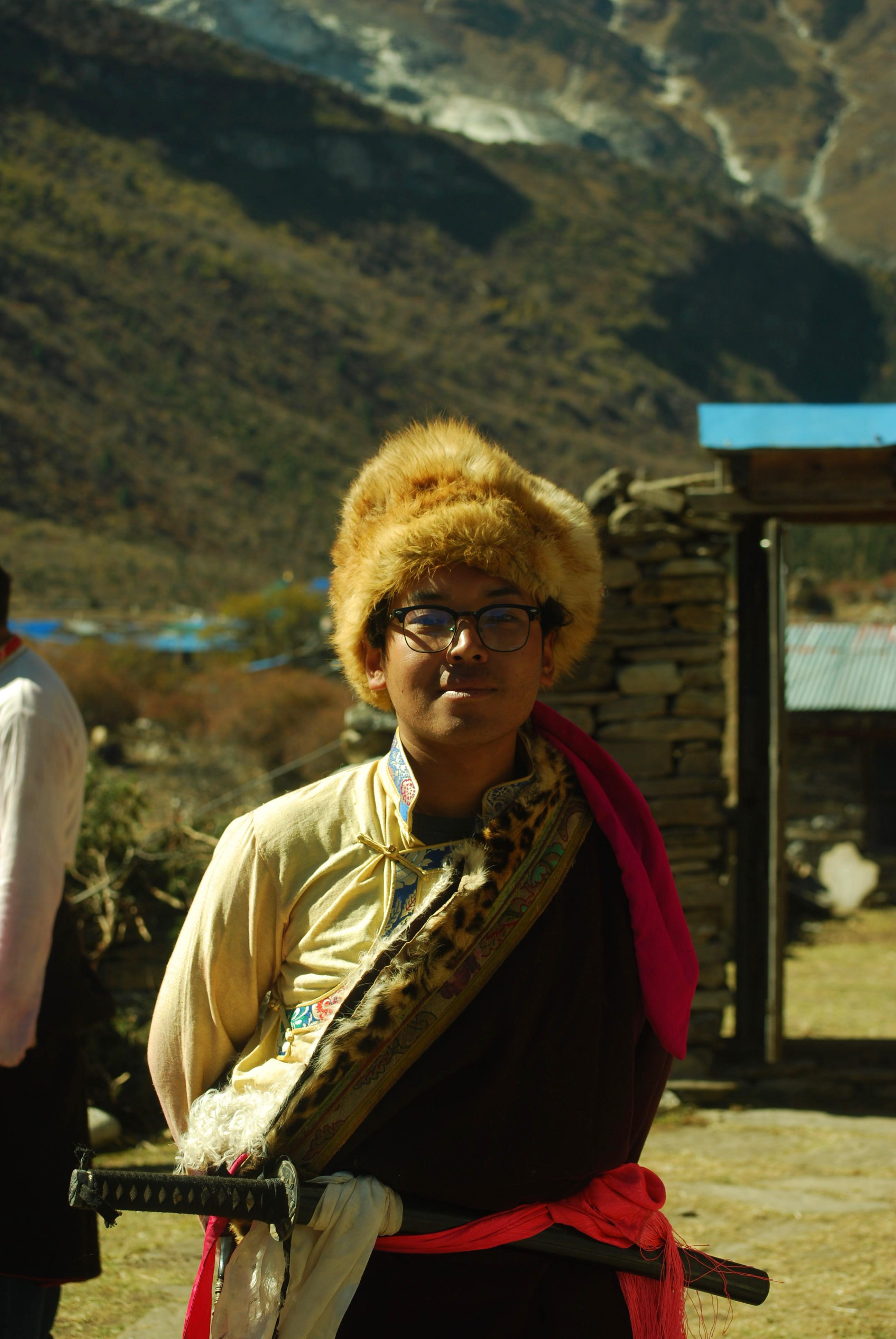
The lower valley is Gurung and Magar; above Deng the people are Nubri, of Tibetan origin, and in the side valley they are Tsumba. Each has its own dialect, dress and calendar.
- Lower valley
- Gurung and Magar
- Nubri
- Samagaun · Lho · Prok
- Tsum
- Chumchet · Chhekampar
- Municipality
- Tsumnubri, 7 wards
Roughly forty kilometres of walking separates two entirely different ways of living, and the change happens gradually enough that most people miss the moment it occurs.
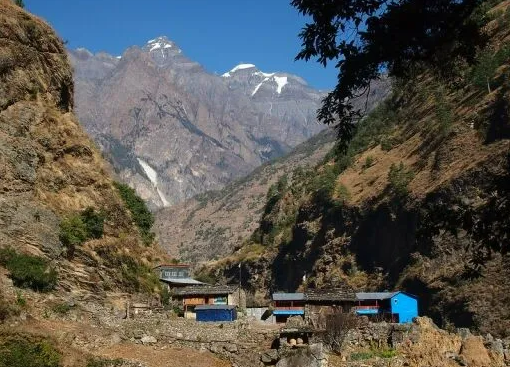
The lower Budhi Gandaki is Gurung and Magar country, Hindu in practice with a long history of army service, farming maize, millet and rice on terraces that fall hundreds of metres to the river. Houses are stone with slate or tin roofs and open eaves. This is the Nepal that most visitors picture.
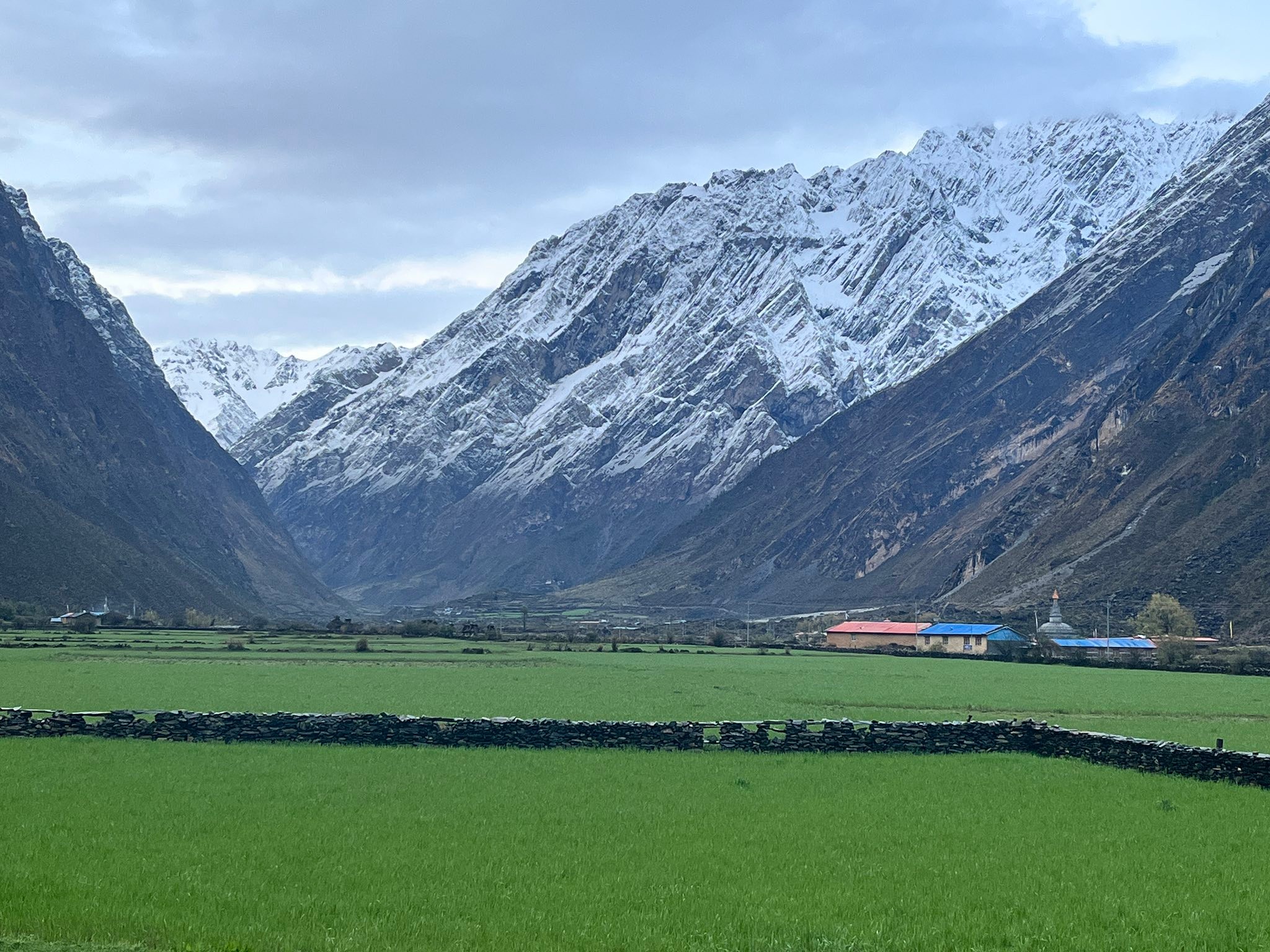
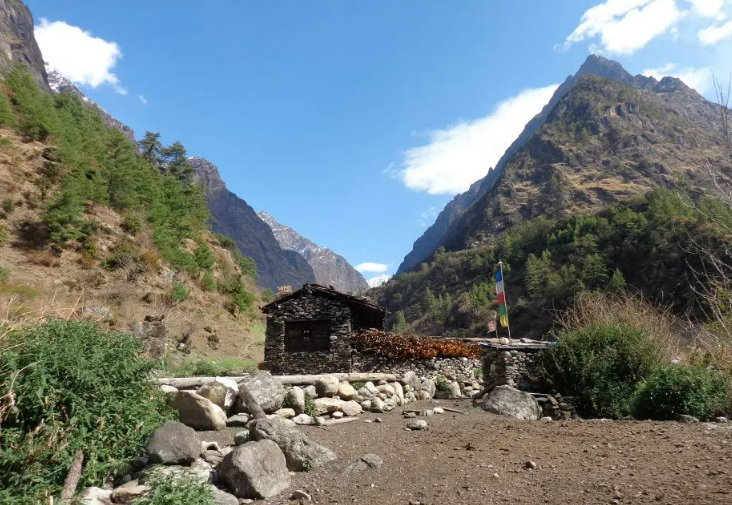
Above Jagat the mani walls begin, and by Deng the shift is complete. These are the Nubri, of Tibetan origin, who came over the passes centuries ago and kept the language, the architecture and the religion. Houses are flat-roofed, built tight against the wind, with stacked firewood on the roof as both fuel store and status symbol. The crop is barley, buckwheat and potatoes, and above about 3,500 metres it is mostly potatoes.
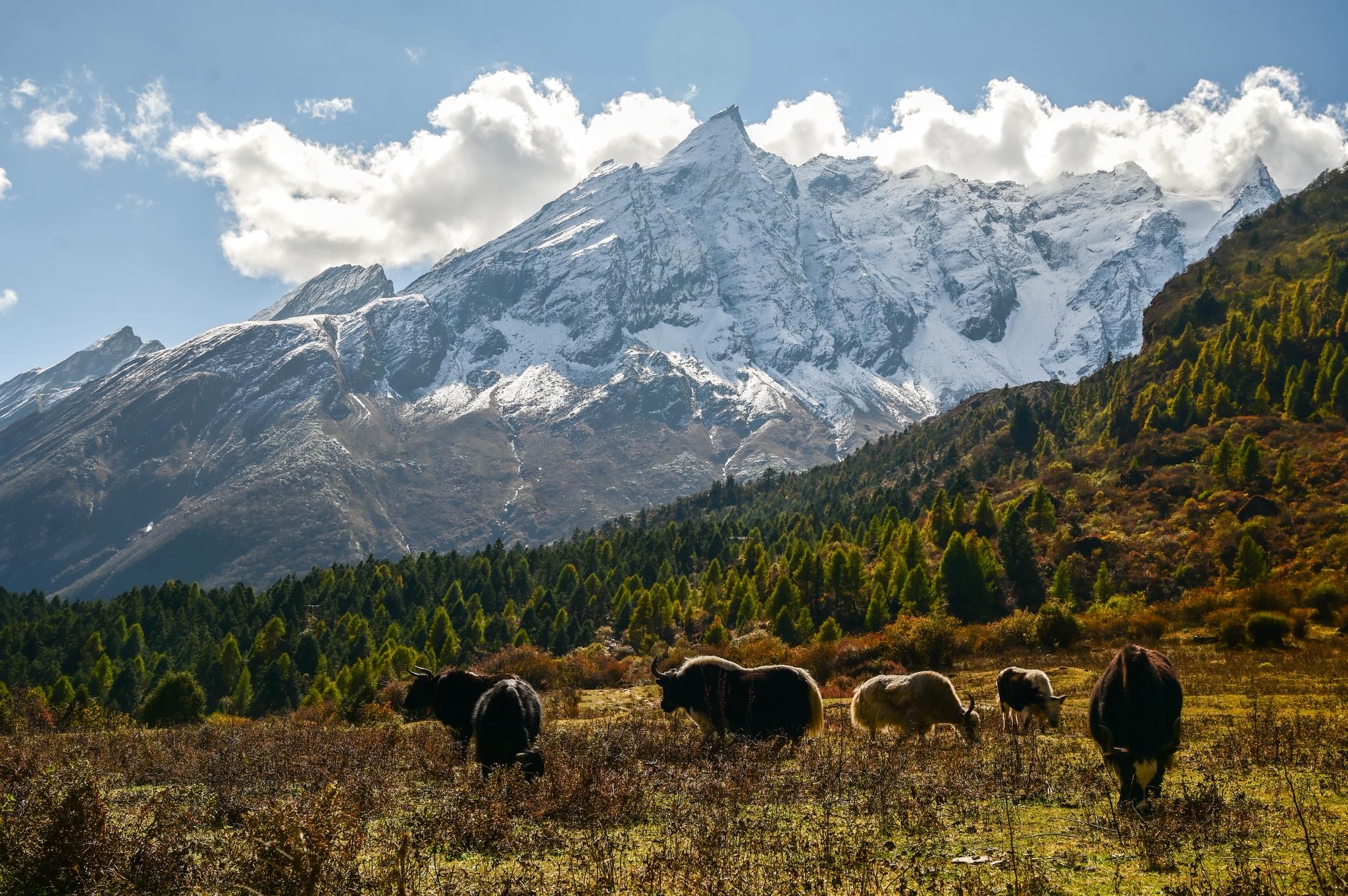
Lho at roughly 3,180 metres, Samagaun at 3,530 and Samdo at around 3,875 are the main Nubri settlements. Samagaun is the largest and, at about two hundred houses, is effectively the capital of the upper valley. Its people herd yaks on the pastures under the north face and trade over the Tibetan border at the Rui La, a route that has been in use far longer than the international boundary it now crosses.
Tsum is a separate case. The Tsumba speak their own dialect, keep their own calendar, and live in a valley that was formally declared shyagya, non-violent, in 1920. Hunting and the killing of animals remain forbidden there, and the vow is observed rather than commemorated. Chhekampar, Nile and Chhule are the main upper settlements, sitting under Ganesh Himal with a view back down the valley that most people describe as the best of the whole trip.
The polyandry that anthropologists came to Tsum to study, brothers sharing a wife to keep small landholdings intact, has largely gone within living memory, along with a good deal of the population, which has drifted towards Kathmandu and abroad. Many houses in both valleys are shut for most of the year.
Practically, this means almost every lodge you sleep in is a family house with rooms added. The money you spend on a room and three meals goes to that household directly, which is why we rotate lodges through a village rather than always taking the best one. Guides, porters and mule owners come from the same settlements. Nothing about that is charity. It is simply where the work is.
- Gurung and Magar in the lower gorge, Hindu, terraced maize and rice
- Nubri above Deng, Tibetan origin, flat roofs, barley and potatoes
- Tsumba in the eastern side valley, own dialect, shyagya vow since 1920
- Lodges are family houses. Room and board go straight to the household
Three ways to walk Manaslu.
Everything on these pages is walked on one of our journeys. Start with the three we are asked about most.
Ready to walk?
Tell us your dates and pace. A journey designer replies within two days.