
Soul to Summit – A Mindful Journey to Serang and Pungyen
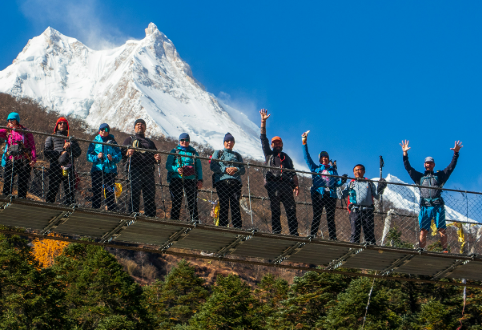
Walk the ancient trails of Nubri, where the Himalayas hold stories of faith, stillness, and timeless wisdom. Soul to Summit is a Himalayan trekking retreat that brings together the adventure of the mountains, the practice of meditation, and the quiet discovery of oneself.
Beyond the familiar trails, the journey leads to some of Nubri's ancient sacred places, including the pristine and lesser-explored sanctuary of Serang. Here, surrounded by forests, mountains, and the silence of the Himalayas, there is space to slow down, turn inward, and reconnect with what matters.
The journey follows a rhythm of mindful walking, seated meditation, cultural encounters, and moments of stillness. Guided by an experienced trekking guide and a qualified meditation practitioner, you will discover a different way of experiencing the mountains—not simply as landscapes to cross, but as spaces to pause, reflect, and grow.
No previous meditation experience is needed. Just bring an open mind, a willingness to walk, and the curiosity to explore both the world around you and the one within.
A qualified meditation practitioner walks with the group and leads a sit every morning and evening, with guided practice on the trail between.
A licensed guide from the Gorkha district on every departure
Two to ten walkers, one porter for every two
Breakfast, lunch and dinner on every trekking day
- Highest point
- 5,106 m · Larkya La
- Grade
- Demanding
- Best season
- Mar – May · Oct – Nov
- Starts and ends
- Kathmandu
Nestled in the remote Kyimolung Valley of northern Gorkha, beneath the majestic Shringi Himal, Serang Monastery is a centuries-old sanctuary of Tibetan Buddhist learning, meditation, and spiritual practice. The monastery has preserved the living traditions of Buddhist wisdom for generations. Surrounded by pristine forests and towering mountains, it offers a rare glimpse into the spiritual heart of Nubri. Home to a community of monks and nuns dedicated to study and contemplation, Serang invites travelers to step away from the familiar, embrace the silence of the Himalayas, and discover a deeper connection with themselves and the sacred world around them.
Touring Information
- Serang, Pungyen and Ribum: Discover a hidden Himalayan sanctuary of Buddhist spirituality, meditation, and ancient traditions.
- Walking meditation through the Budhi Gandaki gorge and the Nubri pastures.
- Slow down, reconnect with nature, and nurture your inner well-being through a mindful trekking experience.
- Crossing the Larkya La at 5,106 m in silen
Arrive in Nepal's vibrant capital and meet your guide and the meditation teacher.
Travel through winding mountain roads, terraced hills, and riverside villages to reach Machha Khola.
Follow the Budhi Gandaki River through lush forests, cascading waterfalls, and traditional Gurungs settlements. Enjoy the last semi-urban village until you cross the pass.
Walk through dramatic river gorges, forested trails, and peaceful villages as you venture deeper into the Himalayas. Welcome to Nubri!!!
Explore quiet mountain trails and traditional Nubri settlements, approaching the sacred landscapes of the upper valley.
Leave the main trail and venture towards Serang Monastery, a secluded spiritual sanctuary nestled amid pristine forests and towering Himalayan peaks. Spend time experiencing the tranquillity of this sacred place, where Buddhist traditions, meditation, and the stillness of nature offer a rare opportunity to turn inward.
Bid farewell to the peaceful surroundings of Serang and retrace your steps to the main Manaslu trail, continuing through Nubri's beautiful landscapes. Carry the monastery's stillness with you as you return to the rhythm of walking, breathing, and observing the world with renewed attention.
Ascend through pine forests and traditional villages, discovering the distinctive culture and landscapes of Nubri Valley.
Pass through the traditional villages of Sho and Lho, where monasteries, prayer flags, and intricately built houses reflect the living Buddhist heritage of Nubri. As the mountains draw closer and the landscape opens towards the majestic Manaslu range, let the beauty of the trail invite moments of quiet reflection.
Take a rewarding excursion to Pungyen Gompa, a sacred monastery set beneath the magnificent slopes of Manaslu, where the vast mountain landscape inspires awe and contemplation. Continue towards Samagaun, carrying with you the sense of spaciousness and stillness found in these high Himalayan sanctuaries.
Spend a restorative day exploring Samagaun, discovering its traditional homes, including the birth home of His Eminence Yongey Mingyur Rinpoche - a great Buddhist meditation master—and his elder brother, His Eminence Tsoknyi Rinpoche, as well as local culture and enduring Buddhist heritage, while allowing your body to acclimatize to the altitude. Make time for meditation, gentle walks, and meaningful encounters with village life, remembering that a retreat is as much about being present as it is about reaching a destination.
Visit Sama Gompa and the striking turquoise waters of Birendra Lake before continuing towards Samdo through the dramatic high-altitude landscapes of the upper valley. As the air grows thinner and the mountains rise around you, embrace a slower pace and discover the quiet clarity that comes from walking with awareness.
Follow the rugged trail towards Dharamsala, passing through an increasingly stark and magnificent landscape beneath the towering Himalayan peaks. This high-altitude journey invites patience, mindful breathing, and respect for the mountains as you prepare for the crossing of the Larkya La Pass.
Cross the spectacular Larkya La Pass, the highest point of your journey, where immense Himalayan peaks unfold across a breathtaking panorama of snow, ice, and sky. Descend towards Bimthang with a profound sense of accomplishment, carrying the memories of a journey that has challenged your body and created space for inner discovery.
Descend through alpine meadows, forests, and mountain settlements towards the lower valleys.
Though the trek has come to an end, the stillness cultivated along the trail can continue to accompany you long after you return home.
Enjoy a leisurely day to rest, explore Kathmandu's rich cultural heritage, or visit its sacred Buddhist sites at your own pace. Take this opportunity to reflect on your journey and allow the experiences of the Himalayas to settle before your departure.
As you prepare to leave Nepal, carry with you the memories of ancient monasteries, mountain trails, and the people who made this journey meaningful. The summit may lie behind you, but the journey within continues with every mindful step you take. We bid farewell at TIA.
Important Note: This itinerary is designed to offer a meaningful Himalayan trekking and wellness experience. However, it may be subject to change due to weather conditions, trail accessibility, health and safety considerations, or other unforeseen circumstances. Our team will make every effort to ensure your safety and comfort while preserving the spirit and essence of the journey.

- Licensed, English-speaking local guide from the Gorkha district
- Porters at one per two trekkers, loads capped at 20 kg
- Manaslu /Annapurna Conservation Area and restricted-area permits
- Teahouse accommodation on trail, twin share
- Breakfast, lunch, tea and dinner on every trekking day
- Private transport Kathmandu – trailhead – Kathmandu
- Three nights in Kathmandu, breakfast included
- Basic First Aid Kit

Permits and paperwork
Yes, and it is not optional. The upper Manaslu valley is a restricted area, and the restricted-area permit can only be issued to a group of two or more trekkers travelling with a licensed guide through a registered Nepali agency. You cannot obtain one as an independent walker, and there is a checkpoint at Jagat where it is inspected. Solo trekkers are paired into a group before departure.
Three. The Manaslu Restricted Area Permit is US $100 per person for the first seven days from September to November, then US $15 for each additional day; from December to August it is US $75 for the first seven days and US $10 a day after. The Manaslu Conservation Area Permit is NPR 3,000 (about US $25), and because the trail finishes inside the Annapurna region you also need the Annapurna Conservation Area Permit, another NPR 3,000. We arrange all three; they are quoted separately from the trip price because the restricted-area fee depends on your dates and how many days you spend above Jagat.
The restricted-area permit is issued against your passport, so we need a scan of the photo page and two passport photographs before we can apply. Permits are issued in Kathmandu and cannot be applied for from the trailhead, which is why we ask for these at least a fortnight before departure.
You should not walk this trail without it, and it needs to cover trekking to the altitude you will reach as well as helicopter evacuation. Above Samagaun there is no road, and the only way off the mountain quickly is by air. Ask us what the policy needs to say if you are unsure — it is a question we answer most weeks.
Altitude and difficulty
The Larke La is 5,106 m, and crossing it is the hardest day of the trek: a long ascent starting before dawn from Dharamsala at about 4,460 m, then a descent of more than 1,500 m to Bimthang on the far side. It is not technical — there is no rope, no crampons in a normal autumn — but it is a very long day at altitude, often in wind, sometimes in snow. If you have walked to 4,000 m before and were comfortable, you will manage it.
The trail climbs from about 900 m at Machha Khola to 5,106 m at the pass, and our days are built around the standard guidance: no more than about 500 m of sleeping altitude gained per day once above 3,000 m, and a rest day roughly every 1,000 m. The acclimatisation day at Samagaun is walked rather than spent lying down — up towards Pungyen Gompa or Birendra Lake and back down to sleep, which is what actually helps.
Your guide checks how everyone is each evening, and the answer to worsening symptoms is always the same: go down. The valley loses height quickly, so descending is usually a matter of hours rather than days. Where it is not — above Samdo, on the approach to the pass — evacuation is by helicopter, which is why the insurance question above is not a formality.
Fit enough to walk five to seven hours a day, day after day, on uneven ground, carrying a daypack. The distances are not extreme; the accumulation is. Hill walking with a pack in the months before you come is worth more than any amount of gym work.
Seasons and weather
October and November are the clearest and most settled, with cold nights high up and reliable views of Manaslu. March to May is the other season: warmer nights, rhododendron in the middle valley, and more afternoon cloud. The monsoon from June to August makes the lower gorge leech-ridden and the road to the trailhead unreliable, and deep winter closes the pass.
It happens, most often in late autumn and early spring, and it is a decision your guide makes on the ground with the lodge keepers at Dharamsala rather than one taken in Kathmandu. When the pass cannot be crossed safely the group returns down the valley the way it came, which is a longer walk out and a different trek from the one you booked — but it is the only answer we will give to that question.
At Dharamsala, the last stop before the pass, expect nights around −10 °C in late autumn and colder in winter. Lower down, below Namrung, it is mild. The full gear list we send after booking is written for the coldest night, not the average one.
On the trail
Every journey begins and ends in Kathmandu. The drive to Machha Khola takes eight to ten hours by private jeep on a road that is paved for the first half and not for the second. The return from Dharapani or Besisahar is similar. There is no flight to the trailhead.
In teahouses — family-run lodges in the villages along the trail. Twin rooms with a shared bathroom for most of the route; simpler and colder the higher you go. Nothing on this trail is a hotel, and that is much of the point.
Patchy in the lower valley and effectively absent above Namrung. A few lodges sell wifi by the hour when their solar has held up. We treat the quiet as part of the journey rather than a problem to solve, and we tell families at home to expect several days of silence.
Most lodges charge devices for a small fee, from solar. It is slower and less reliable the higher you go, so bring a power bank, and keep batteries in your sleeping bag on the cold nights — they lose charge fast at −10 °C.
We do not buy bottled water above Jagat, because there is no way to take the plastic back out of the valley. Boiled water is available at every lodge and we carry filters. Bring a bottle that can take boiling water.

Every journey is shaped with you before it is booked.
Tell us your dates, your pace, and what you hope to leave behind. A Journey Designer writes back within two days.
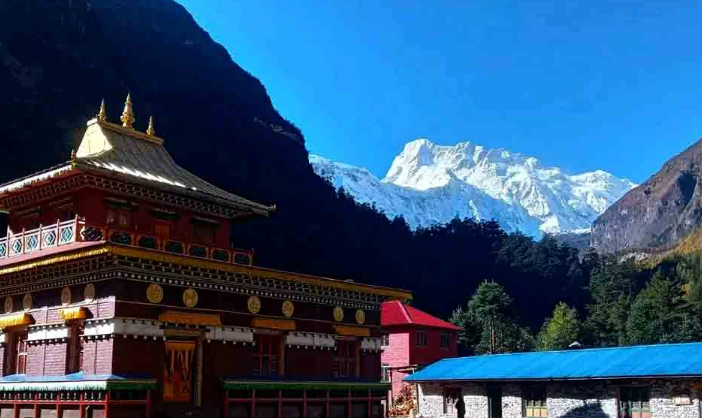
Manaslu Circuit Trek
Two weeks around the eighth-highest mountain on earth, on a trail that still carries more mules than trekkers.
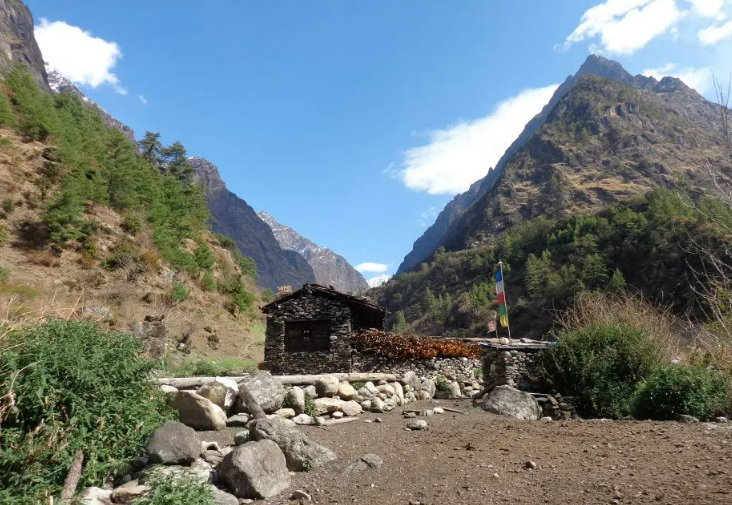
Ethno-Eco Trek: The Himalayan Lab
A trek designed for university students researching Himalayan ecology or Himalayan culture, and for the field visits their courses ask of them.
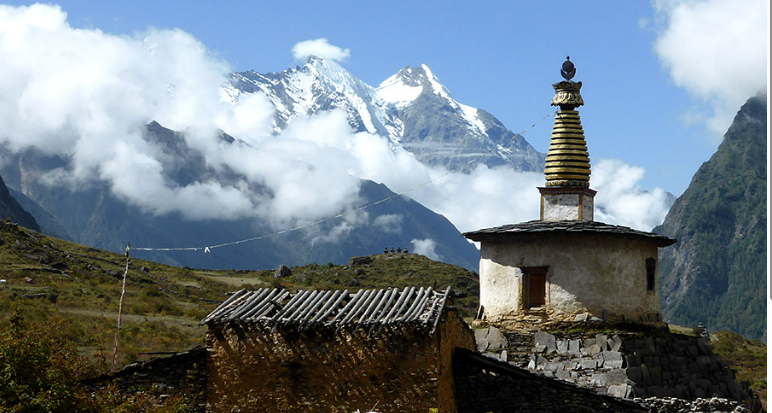
Tsum Valley Trek
A hidden valley on the Tibetan border, closed to visitors until 2008 and still bound by a vow against killing animals.