Slowly is the only way.
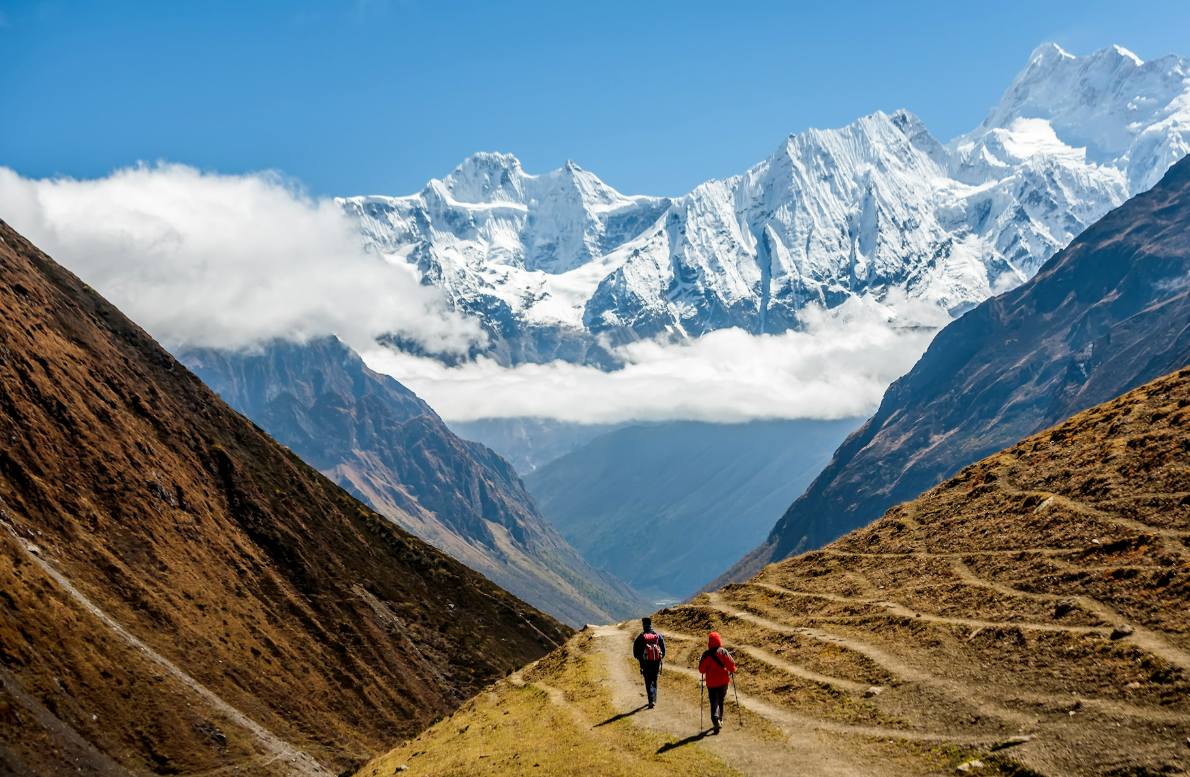
The trail rises from 900 m to 5,106 m. Our itineraries follow the standard guidance: no more than 500 m of sleeping altitude gained per day above 3,000 m, and a rest day every 1,000 m.
- Trailhead
- ~900 m
- Samagaun rest day
- 3,530 m
- Last lodge
- Dharamsala · ~4,460 m
- Larkya La
- 5,106 m
The Manaslu Circuit gains more than four kilometres of vertical between the trailhead and the pass. Done over the standard fourteen days, that is a gentle profile by Himalayan standards and it is the main reason the route has a good safety record. Done over ten, it is not.
The guidance every reputable operator follows is straightforward: above 3,000 metres, gain no more than about 500 metres of sleeping altitude per day, and take a rest day roughly every 1,000 metres. On this trail that translates into a fixed acclimatisation day at Samagaun at 3,530 metres, and on our longer journeys a second one higher up at Samdo, or at Mu Gompa if the itinerary has gone through Tsum.
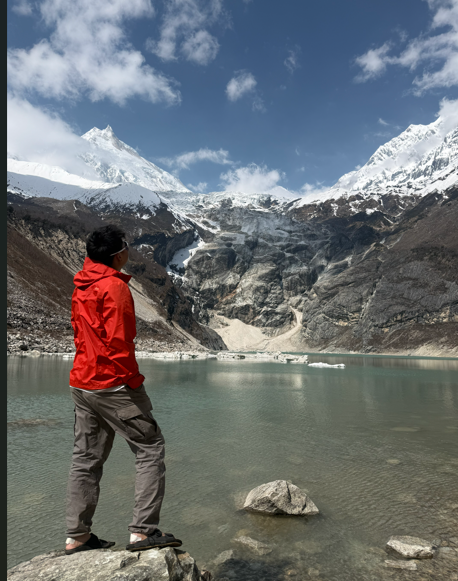
A rest day does not mean lying down. The principle is climb high, sleep low: you walk up several hundred metres during the day and come back to sleep at the village. At Samagaun the standard options are Birendra Lake at around 3,450 metres for an easy day, Pungyen Gompa for a moderate one, or Manaslu Base Camp at roughly 4,800 metres for a hard one. All three work. Doing nothing at all works less well.
Almost everyone gets some symptoms. A mild headache, broken sleep, odd dreams, shortness of breath on stairs, and a reduced appetite are all normal on the first nights above 3,000 metres and are not, by themselves, a reason to stop. What matters is the direction of travel. Symptoms that ease over a day are acclimatisation working. Symptoms that worsen are not.
The warning signs that change the plan are a headache that does not respond to painkillers, vomiting, unsteadiness on your feet, confusion, and breathlessness at rest. The last three are the serious ones. Ataxia, meaning a loss of coordination that shows up first as an inability to walk a straight line, and any breathlessness while sitting still, are treated as emergencies and mean immediate descent, at night if necessary.
Descent is the treatment. Not oxygen, not medication, not a rest day at the same altitude. Losing 500 to 1,000 metres resolves almost every case quickly. On our treks the guide makes that call and it is not a negotiation, because the one consistent factor in altitude deaths in Nepal is somebody who did not want to spoil the trip.
Some practical things that help. Drink more than you think you need, three to four litres a day, and expect to be up in the night for it. Walk slower than feels natural, particularly on the first day above Namrung. Eat, even without appetite. Avoid alcohol and sleeping tablets above 3,000 metres. Diamox, acetazolamide, genuinely helps as a preventative and is worth discussing with a travel doctor before you leave, not with a pharmacist in Thamel.
Above all, the itinerary is the safety equipment. If someone offers you the Manaslu Circuit in ten days at a good price, what they are selling you is the removal of the Samagaun rest day.
- Above 3,000 m, no more than ~500 m of sleeping altitude gained per day
- A rest day roughly every 1,000 m. Samagaun at 3,530 m is fixed on every itinerary
- Climb high, sleep low. Rest days are walking days, just not forward ones
- Ataxia or breathlessness at rest means immediate descent, at night if needed
How high is the Manaslu Circuit and where is the highest point?
The trail starts around 900 metres and its highest point is the Larkya La at 5,106 metres. The highest place you sleep is Dharamsala, also called Larkya Phedi, at about 4,460 metres. The acclimatisation stop is Samagaun at 3,530 metres.
Do I need to be experienced at altitude to do this trek?
No, but you need an itinerary that respects it. Plenty of people cross the Larkya La as their first time above 4,000 metres. What matters far more than experience is the profile: a fourteen-day itinerary with the Samagaun rest day intact is manageable for most reasonably fit walkers, and a compressed ten-day one is not, regardless of how experienced you are.
Should I take Diamox?
It is worth discussing with a travel doctor before you leave. Acetazolamide does genuinely reduce the incidence of acute mountain sickness and is widely used on this route. It is not a substitute for a sensible ascent profile, and it does not make it safe to keep climbing with symptoms.
What happens if I get altitude sickness on the trek?
We descend. Mild symptoms usually mean an extra night at the same altitude and a reassessment in the morning. Anything that is worsening, and any sign of ataxia or breathlessness at rest, means losing altitude immediately, which resolves the great majority of cases quickly. Guides carry a pulse oximeter and a first aid kit, and the decision to descend rests with the guide rather than the trekker.
What insurance do I need?
A policy that explicitly covers high-altitude trekking in Nepal and includes helicopter evacuation and repatriation. Many standard travel policies exclude altitude above 4,000 metres, which would leave you uncovered for most of the second half of this trek. We check the policy before departure.
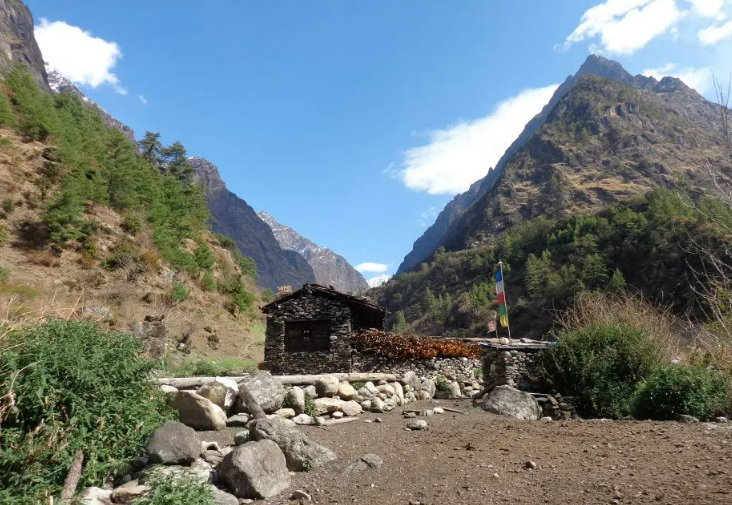

Three ways to walk Manaslu.
Everything on these pages is walked on one of our journeys. Start with the three we are asked about most.

Ready to walk?
Tell us your dates and pace. A journey designer replies within two days.