Retreats · 4 min
Best mindful retreats in Nepal
Nepal has meditation centres, monastery stays and walking retreats, and they suit very different people. An honest comparison, including where a trek is the wrong answer.
Different ways to walk Manaslu.
Understanding the Manaslu region.
Who Drokpo is.
Nepal has meditation centres, monastery stays and walking retreats, and they suit very different people. An honest comparison, including where a trek is the wrong answer.
We run mindful treks, so treat the following with the appropriate suspicion. We have tried to be useful rather than promotional, which mostly means being clear about who each option is wrong for.
There are broadly four things people mean by a retreat in Nepal, and they are not variations of one another.
Structured courses at established centres in and around the Kathmandu valley. Kopan Monastery above Boudhanath is the best known, running introductory and month-long courses in the Tibetan Gelug tradition. Vipassana centres run ten-day silent courses in the Goenka style, free of charge and funded by donation, with a fixed and demanding schedule.
This is the option with the most actual instruction in it. You will learn a technique properly, with teaching, in a building designed for the purpose.
It is also the option people most often underestimate. Ten days of silence on a schedule that starts at four in the morning is genuinely hard, and the difficulty is psychological rather than physical. If you want to learn to meditate, this is the serious answer. If you want a restful holiday, it emphatically is not.
Best for: learning a technique properly, with real teaching
Not for: anyone wanting rest, scenery, or flexibility
Typical length: 10 days to a month
Shorter, less structured, and closer to being a guest than a student. Namobuddha, a few hours east of Kathmandu, is a significant pilgrimage site with a large monastery and guest accommodation. Several gompas in the hill country take visitors for a few nights.
In the Manaslu region the equivalents are in Tsum. Rachen Nunnery near Chhokangparo houses a large community of nuns, and Mu Gompa sits at the head of the valley following the Sakya lineage. Both were established in the early twentieth century by teachers from Tibet. A night at either is not a retreat programme; it is a night in a working monastery, on their schedule, with their food.
The value here is exposure rather than instruction. You are not taught much. You are simply present while people do something they have been doing for a very long time, which for some people is worth considerably more than a course.
The gompas in Tsum and Nubri are in use, not preserved. You visit on their schedule.
Pokhara and the Kathmandu valley have a large number of these, ranging from excellent to entirely cosmetic. The format is usually a comfortable lodge, daily yoga, some meditation, good food and a view.
There is nothing wrong with this and it is what a lot of people actually want. Be honest with yourself about which you are after. The gap between a wellness week and a Vipassana course is not a matter of degree; they are different activities that share vocabulary.
The option we run, and the one with the most obvious conflict of interest, so here is the case against it first.
A trek is a poor place to learn to meditate. You get twenty minutes a day of sitting, no real teaching, variable conditions, and you are tired. If instruction is what you want, a course will serve you better and cost less.
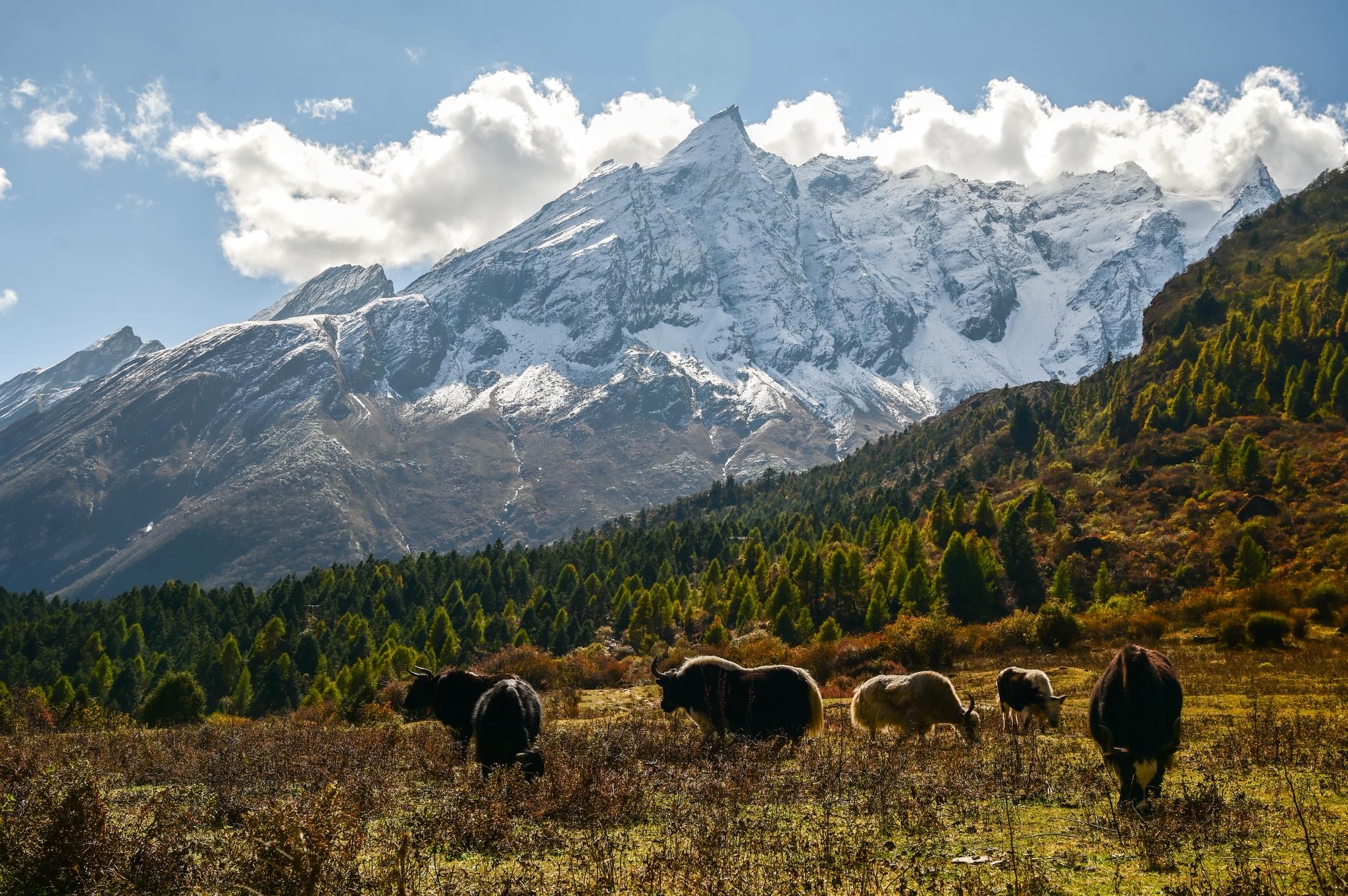
What a trek does that a hall cannot is give you six hours a day of repetitive movement with no decisions in it, in a landscape that has been shaped by centuries of Buddhist practice, at an altitude that quiets the interior monologue whether you cooperate or not. That combination is not available in a building. For people who find sitting still unbearable but walking congenial, it is the version that works.
Best for: people who think better while moving, and want the place as well as the practice
Not for: anyone whose main goal is learning technique
Typical length: 12 to 20 days
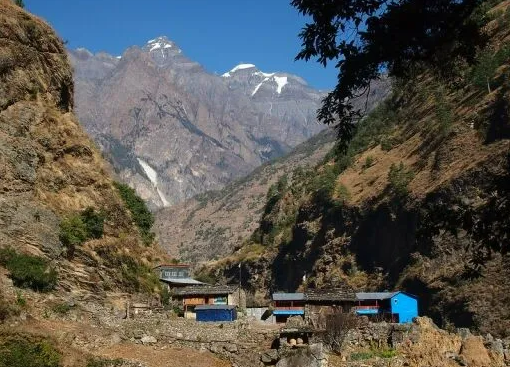
Tsum. A valley that has held a formal vow against killing since 1920.
The question worth asking is what you want to be different afterwards.
If you want a technique you can keep using: a residential course.
If you want rest: a wellness retreat, honestly labelled as such.
If you want to be somewhere genuinely other: a monastery stay.
If you want distance from your ordinary life and a place that argues for attention: a walking retreat.
On timing, autumn from late September to late November and spring from March to mid-May suit all four options. Anything involving the high Manaslu trails is off in the monsoon and unreliable in deep winter, when the Larkya La is frequently snowed shut.
On authenticity, be wary of anything marketed as an ancient secret. The genuinely old institutions in Nepal, the gompas at Mu and Rachen, the shyagya vow that Tsum declared in 1920, Kopan, are not secretive and are not selling anything. That is generally how you tell.
Tell us your dates and pace. A journey designer replies within two days.